Research approach
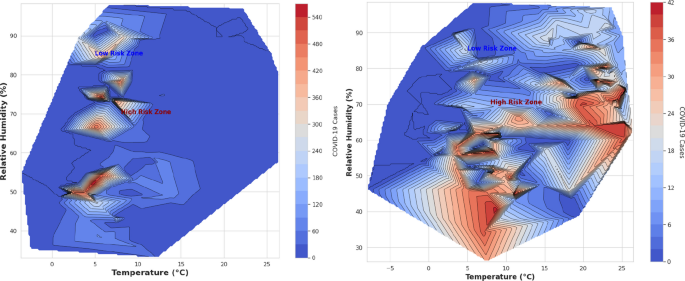
Generalized additive models captured nonlinear associations; clustering and risk-zone analysis explored combinations of environmental conditions.
Key findings
- Full-data explained deviance was 63.0% in Daegu and 48.3% in Seoul.
- Climate-related patterns were more prominent in Daegu; pollutant-related associations were important in Seoul.
- The analysis supports locally tailored environmental surveillance. These observational associations do not establish causation.
Publication
Measuring the impact of climate and air quality on COVID-19 transmission dynamics: a tale of two cities in pandemic preparedness
Gayathry R. Menon, Sayooj Aby Jose, Asaph Young Chun, Anuwat Jirawattanapanit & Hsuan-Wei Lee
BMC Public Health · 26, 2374
Read the full paperSummary prepared from the linked publication. The full article provides the complete methods, results, and limitations.